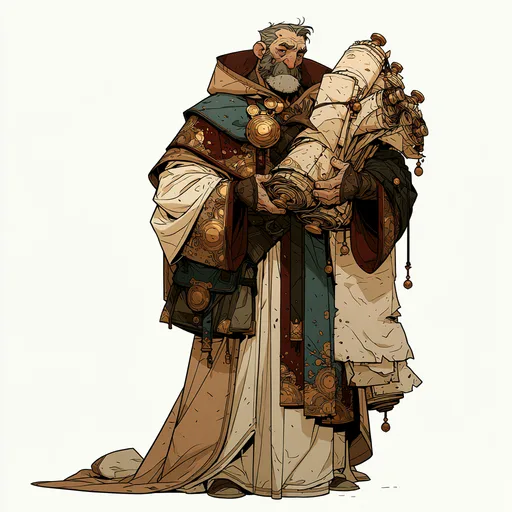
Keeper of the Chronicle and arbiter of truth, law, and memory among the Hillfolk. The Judge's real machinery is social, which means the parts of the sheet that matter most are the ones other classes skip.
Bonds are your class feature
Every playbook has bonds. For the Judge they're the point.
They live on the Notes tab. Add one for each person your Judge has a standing relationship with — not just the other players. The town elders, your apprentice, the Judges of neighbouring steadings: those are all bonds, and they're what you spend when you invoke your authority.
Keep them current. A bond that hasn't been edited in six sessions is usually wrong, and the Judge is the class that notices.
Bonds sit above your notes on that tab, and the two work differently: bonds are visible to your whole party like the rest of your sheet, but the notes below them are yours alone. Only you can read these — not your GM, not the rest of your party. Good ground for the suspicions and rulings-in-progress a Judge collects but doesn't say aloud yet.
Your background's grant
- Legacy — the standard start.
- Missionary — adds the aviary to your possessions, and gives you a bond with the Judges of neighbouring steadings. Sled Dog offers that bond during creation; it lands on your Notes tab like any other.
- Prophet — adds Commune with Aratis to your Moves tab.
Sanction, from Commune with Aratis, has no dedicated counter. Track it in the move's own text — tap ⋯ on the move card and note what you're holding — or in Harm & conditions on the Stats tab if you'd rather keep it visible. It's a short-lived hold, so a note beats a widget.
Special possessions
You start with your symbol of authority and scribe's tools, then pick one more:
- Aviary — messenger birds; if one becomes a named creature in play, it belongs on the Followers tab
- Carpenter's tools, Engineer's tools
- Smithy (or access to it)
The symbol of authority is worth a note of its own: tap ⋯ on it and describe what it actually is. It's the object the whole class points at.
The Chronicle
Sled Dog has no separate Chronicle document — and deliberately so, because what belongs in it is the party's shared history, not one character's inventory. Two good homes for it:
- Character → Background & story, for what your Judge personally recorded
- The party's world notes, if your GM keeps them — that's where a record the whole table can read belongs
Ask your GM which they'd rather. Either works; splitting it between both doesn't.
Where things live
| Thing | Tab |
|---|---|
| Bonds | Notes |
| Symbol of authority, scribe's tools, aviary | Inventory |
| Commune with Aratis, granted moves | Moves |
| Named birds or messengers | Followers |
The Judge's sheet is mostly names. Keep the bonds honest and the rest of the class runs itself.